Here’s a nice talk on this topic:
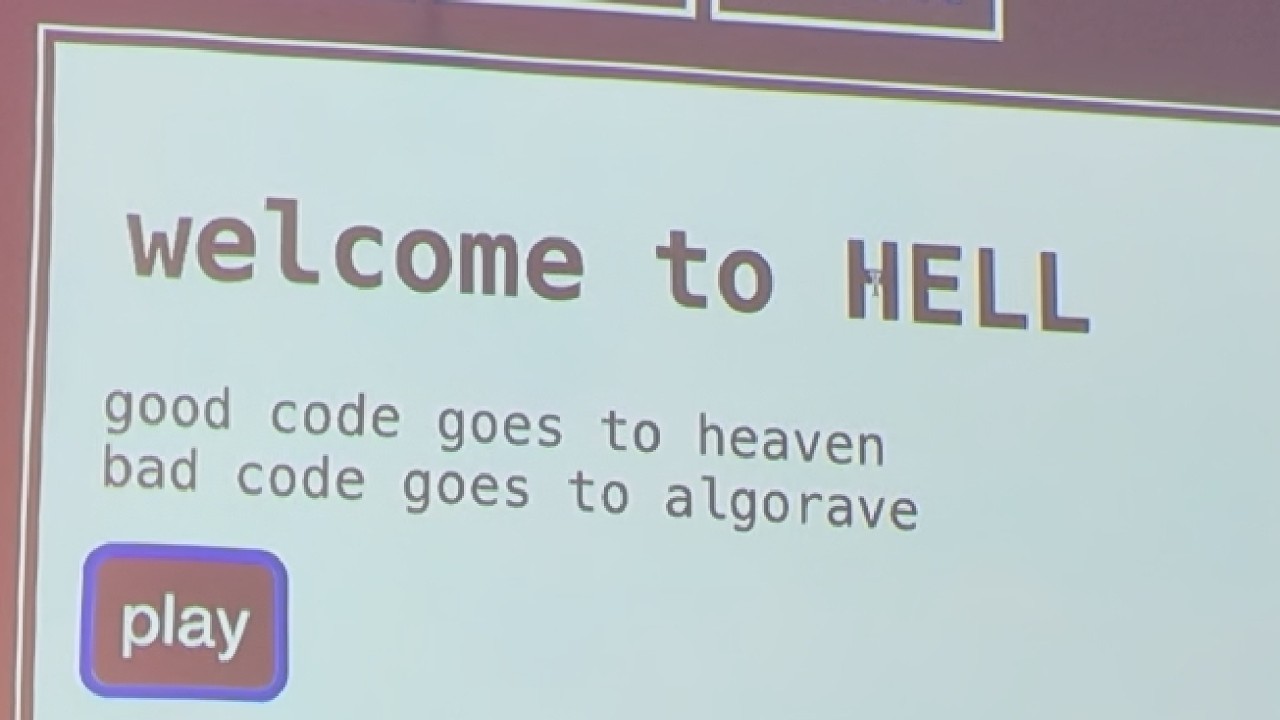
I disagree that live coding isn’t oppositional – it was partly motivated by people in the early 2000s assuming that when a computer runs code to make music, it is being creative rather than the programmer. It might not be oppositional to other wholesome ways of making music, but it is political, and is the opposite of vibe coding.
From one perspective it’s nice that software engineering is being automated, so that we can focus on more fully human use of it.
Looking forward [from June 2017], I see great possibilities. All the young people now learning how to write code for industry may find that the industry has disappeared by the time they graduate, and that their programming skills give no insight into the workings of Deep Learning networks. So, it seems that the scene is set for programming to be untethered from necessity. The activity of programming, free from a military-industrial imperative, may become dedicated almost entirely to cultural activities such as music-making and sculpture, augmenting human abilities to bring understanding to our own data, breathing computational pattern into our lives. Programming languages could slowly become closer to natural languages, simply by developing through use while embedded in culture. Perhaps the growing practice of Live Coding, where software artists have been developing computer languages for creative coding, live interaction and music-making over the past two decades, are a precursor to this. My hope is that we will begin to think of code and data in the same way as we do of knitting patterns and weaving block designs, because from my perspective, they are one and the same, all formal languages, with their structures intricately and literally woven into our everyday lives.